


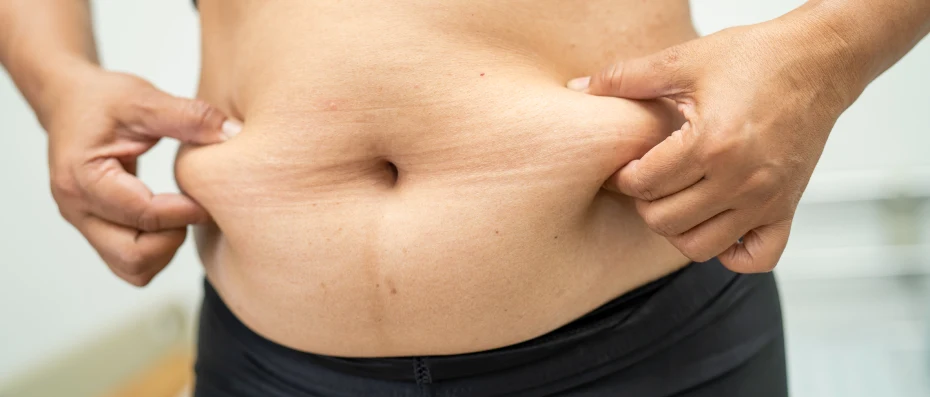
“How much fat can you remove during liposuction?”
It sounds like a straightforward question.
Patients often expect an answer such as:
3 liters. 5 liters. 10 liters.
But this is one of those situations where a single number can actually be misleading.
First, surgeons do not usually measure liposuction simply by saying, “We removed five liters of pure fat.” What comes out during liposuction is called total aspirate, which contains both fat and fluid.
Second, the amount that can be removed safely is not identical for every patient.
Body size, BMI, medical history, hemoglobin level, the number of areas treated, whether other operations are being performed at the same time, anesthesia, fluid management and the surgical setting can all affect the decision.
The American Society of Plastic Surgeons (ASPS) has historically defined large-volume liposuction as more than 5,000 mL of total aspirate and recommends additional facility and postoperative monitoring considerations when these volumes are exceeded. Importantly, this does not mean that 5 liters of pure fat is universally safe—or that 5 liters is an appropriate target for every patient. (American Society of Plastic Surgeons)
So perhaps the better question isn’t:
“What’s the maximum amount you can remove?”
It’s:
“How much can be removed safely from my body while still creating a good contour?”
That is a very different question.
How Much Fat Can Be Removed During Liposuction?
There is no single maximum amount of fat that is appropriate for every liposuction patient.
In U.S. plastic-surgery guidance, 5 liters of total aspirate has traditionally been an important threshold: ASPS defines removal above 5,000 cc of total aspirate as large-volume liposuction and recommends that such procedures be performed in an acute-care hospital or appropriately accredited/licensed facility with suitable postoperative monitoring. (American Society of Plastic Surgeons)
But notice the terminology:
Total aspirate—not pure fat.
And even more importantly:
5 liters is not a goal.
A smaller patient may require considerably less.
A larger patient may have very different anatomical and physiological considerations.
Research involving more than 4,500 liposuction patients found that both liposuction volume and BMI influenced complication risk, suggesting that an absolute volume alone does not accurately describe an individual’s risk. (PubMed)
In other words:
The safest amount is patient-specific.
Does “5 Liters of Liposuction” Mean 5 Liters of Fat?
No. This is one of the most important distinctions patients should understand.
When surgeons discuss liposuction volume, they may be referring to total aspirate.
Total aspirate includes:
Fat + infiltrated fluid removed during the procedure.
Before fat is suctioned, fluid is commonly introduced into the tissues as part of the liposuction technique.
Some of this fluid comes back out with the fat.
So if you see someone online saying:
“I had five liters removed.”
you cannot automatically conclude that five liters of pure body fat were removed.
ASPS specifically states that total aspirate should be used when tracking liposuction volume and defines it as the combination of fat and fluid removed. (American Society of Plastic Surgeons)
This distinction matters enormously when comparing patients or surgical results online.
Is 5 Liters the Maximum Safe Amount of Liposuction?
Not exactly.
The number 5 liters is frequently discussed because it has historically been used to define large-volume liposuction.
It should not be interpreted as:
“4.9 liters is always safe and 5.1 liters is always dangerous.”
Human physiology doesn’t work according to such a simple cutoff.
ASPS guidance itself notes that there is not scientific evidence establishing one universal volume at which liposuction suddenly becomes unsafe. However, complication risk increases as aspirate volume and the number of treated areas increase. (American Society of Plastic Surgeons)
Research has also questioned whether a fixed limit is the best way to assess risk.
A study of 4,534 patients found that liposuction volume and BMI were independently associated with complications. The researchers found increased risk when aspirate volume exceeded approximately 100 mL per BMI unit, although this should be understood as a research-derived risk model—not a universal rule for deciding an individual’s operation. (PubMed)
The key message is therefore:
There is no magic number that is equally safe for every body.
Why Can’t Surgeons Just Remove as Much Fat as Possible?
Because liposuction is surgery—not simply a mechanical process of emptying fat from the body.
As the amount of tissue treated increases, surgeons must consider increasingly important physiological issues including:
- Blood loss
- Fluid shifts
- Electrolyte balance
- Anesthesia exposure
- Body temperature
- Operative time
- Postoperative anemia
- Thromboembolic risk
- Recovery demands
Large-volume liposuction requires particularly careful fluid management because substantial hemodynamic and metabolic changes can occur. (American Society of Plastic Surgeons)
A systematic review and meta-analysis involving 3,583 large-volume liposuction patients found an average aspirate of approximately 7.7 liters across the included studies. The pooled major-complication incidence was 3.35%, with blood loss requiring transfusion the most common major complication reported. The authors also emphasized limitations in the available evidence. (PubMed)
This is why:
“How much can we remove?”
should never be separated from:
“How safely can we perform the operation?”
Is More Fat Removal Better?
No. More liposuction does not automatically mean a better result.
This is one of the biggest misconceptions in body contouring.
Imagine two patients.
One has a relatively slim abdomen but disproportionate fat around the waist and flanks.
The other has significantly more overall body fat.
The first patient may need a relatively modest amount of fat removed to create a dramatic improvement in proportion.
The second could have much more fat removed and still not achieve the same visual definition.
Why?
Because liposuction is about shape, not liters.
A good result depends on:
- Where fat is removed
- How much is left behind
- The relationship between the waist, abdomen, back and hips
- Skin quality
- Muscle anatomy
- Existing body proportions
Removing every possible milliliter of fat is not the objective.
In fact, overly aggressive removal can contribute to contour irregularities and other problems.
The goal is controlled body sculpting—not maximum fat extraction.
How Many Pounds Can You Lose From Liposuction?
This question is understandable—but it approaches liposuction from the wrong direction.
Liposuction should not be considered a weight-loss procedure.
A patient may weigh less after surgery because tissue has physically been removed, but the purpose of liposuction is not to produce a specific reduction on the scale.
ASPS describes liposuction as a procedure that targets excess fat in specific areas to improve body contour and emphasizes that it is not a quick solution for significant weight loss. (American Society of Plastic Surgeons)
So asking:
“How many pounds will I lose?”
is less useful than asking:
“How will removing fat from these particular areas change my proportions?”
Sometimes a relatively small amount of strategically removed fat can create a noticeable visual difference without producing a dramatic change on the scale.
Can Liposuction Remove 10 Liters of Fat?
Large-volume procedures involving total aspirate volumes above 5 liters have been reported in the medical literature, including series with considerably larger aspirate volumes. (PubMed)
However, that does not mean:
“10 liters is safe for everyone.”
And again, reported aspirate volume does not necessarily mean pure fat volume.
A systematic review of large-volume liposuction found a mean aspirate of about 7.7 liters across included studies, but major complications were reported and the authors noted that high-quality evidence remains limited. (PubMed)
Therefore, seeing a surgeon or patient online advertising:
“10-liter liposuction”
should not automatically be interpreted as evidence of a superior procedure.
The appropriate amount depends on the patient and the clinical circumstances.
Does Your Weight Determine How Much Fat Can Be Removed?
Body size and BMI can influence the assessment, but they do not determine the safe volume by themselves.
Research suggests that the relationship between aspirate volume and BMI is relevant to complication risk. (American Society of Plastic Surgeons)
But surgeons also need to consider factors such as:
- General health
- Hemoglobin level
- Cardiovascular status
- History of anemia
- Medications
- Smoking
- Previous surgery
- Areas being treated
- Duration of surgery
- Additional procedures
- Anesthesia plan
- Facility and postoperative monitoring
Recent research continues to investigate more individualized approaches to estimating safe aspirate volume, including models incorporating BMI and preoperative hemoglobin rather than relying only on a fixed volume threshold. (PubMed)
This reinforces an important principle:
Two patients with the same weight may not be appropriate candidates for the same amount of liposuction.
Why Does Hemoglobin Matter in Large-Volume Liposuction?
Because liposuction does not remove pure fat alone.
Some blood loss occurs during surgery.
As treatment volume increases, postoperative anemia becomes an increasingly important consideration.
A study examining patients undergoing more than 5 liters of total aspirate found that preoperative anemia was associated with transfusion in the reported series, leading the authors to emphasize preoperative hemoglobin assessment in large-volume cases. (PubMed)
This is another reason why determining liposuction volume cannot be reduced to looking at someone’s body photographs and saying:
“We can remove eight liters.”
Preoperative medical assessment matters.
Can You Remove More Fat If You Have a Higher BMI?
Not automatically.
A larger body may tolerate and require a different aspirate volume than a much smaller body, which is one reason researchers have explored volume relative to BMI rather than relying exclusively on an absolute cutoff. (PubMed)
But having a higher BMI is not permission to perform unlimited liposuction.
A 2024 study examining VASER liposuction emphasized considering BMI, anatomy and planned aspirate volume together when selecting patients and planning surgery. (PubMed)
Liposuction is also not a substitute for significant weight loss.
If a patient’s primary concern is overall obesity rather than localized disproportionate fat, removing increasingly large amounts of fat may not be the most appropriate strategy.
Can Liposuction Remove Visceral Fat?
No.
This is particularly important when discussing how much abdominal fat can be removed.
Your abdomen contains different types of fat.
Subcutaneous Fat
This sits underneath your skin.
Liposuction can remove some of it.
Visceral Fat
This sits deeper inside the abdominal cavity around the internal organs.
Liposuction cannot remove it.
So a patient may have a large abdomen but relatively little fat that can actually be removed with liposuction.
This is why estimating liposuction volume from body size alone can be misleading.
A firm, protruding abdomen caused substantially by visceral fat cannot simply be flattened by removing more subcutaneous fat.
How Much Fat Can Be Removed With Lipo 360?
There is no fixed amount specifically associated with Lipo 360.
“Lipo 360” describes circumferential body contouring rather than a specific volume of fat removal.
Areas may include the:
- Abdomen
- Waist
- Flanks
- Lower back
- Upper back
The surgeon determines how much should be removed from each area based on anatomy and the desired overall proportions.
One patient may require much less total aspirate than another.
Again:
360 refers to the treatment concept—not the number of liters removed.
Is 360 Liposuction About Removing the Maximum Amount of Fat?
No.
The purpose is to evaluate the torso circumferentially rather than viewing the abdomen in isolation.
For example, reducing abdominal fat without appropriately considering the waist and flanks may not create the silhouette the patient expects.
The important question therefore isn’t simply:
“How many liters did you remove?”
It is:
“Where was the fat removed, and how did that change the patient’s proportions?”
This is particularly relevant when comparing before-and-after results online.
How Much Fat Can Be Removed During a Tummy Tuck With Liposuction?
This becomes more complicated because you are now discussing combined surgery.
A tummy tuck may involve:
- Removal of excess abdominal skin
- Removal of attached skin and fat as a surgical specimen
- Muscle repair when indicated
- Liposuction of selected areas
The tissue removed during the tummy tuck is not the same measurement as liposuction aspirate.
Additionally, combining procedures changes operative time and physiological demands.
ASPS safety recommendations have historically advised caution when combining large-volume liposuction with other procedures such as abdominoplasty because potential risks need to be considered together. (American Society of Plastic Surgeons)
Therefore:
The safe liposuction volume during a tummy tuck cannot simply be copied from the volume used for standalone liposuction.
The entire operation needs to be considered.
What Is Large-Volume Liposuction?
In ASPS guidance, large-volume liposuction is defined as more than 5,000 cc of total aspirate during a single procedure. (American Society of Plastic Surgeons)
That classification matters because larger procedures require additional consideration of:
- Surgical facility
- Monitoring
- Fluid management
- Patient selection
- Anesthesia
- Postoperative observation
ASPS guidance states that large-volume liposuction above 5,000 cc total aspirate should be performed in an acute-care hospital or appropriately accredited/licensed facility, with postoperative monitoring by qualified staff. (American Society of Plastic Surgeons)
Regulations can also differ by country and jurisdiction, so one numerical standard should not be assumed to apply everywhere.
Is Large-Volume Liposuction Safe?
Large-volume liposuction has been performed successfully in appropriately selected patients, but increasing volume introduces additional physiological considerations and potential risk.
A meta-analysis of 23 studies involving 3,583 patients reported a pooled major-complication incidence of 3.35% in large-volume liposuction, with blood loss requiring transfusion being the most frequently reported major complication. (PubMed)
Older and newer clinical series have reported large-volume procedures performed with acceptable outcomes under specific protocols and careful patient selection. (PubMed)
But these findings should not be interpreted as evidence that extremely high-volume liposuction is appropriate for every patient.
Safety depends on much more than volume alone.
Should You Choose a Surgeon Based on How Many Liters They Can Remove?
No.
A promise such as:
“We remove 8 liters.”
or:
“We can remove more fat than other clinics.”
does not tell you whether the procedure is appropriate for your body.
More fat removal is not automatically more skillful surgery.
A responsible surgical plan should consider:
How much fat should remain?
Which areas need reduction?
What will happen to the skin afterward?
How will the waist relate to the hips?
Is the abdomen actually caused by subcutaneous fat?
Can the planned procedure be performed safely?
The number of liters is only one part of that decision.
Liposuction in Istanbul with Dr. Burak Pasinlioğlu
For international patients considering liposuction in Istanbul, Turkey, it can be tempting to compare clinics based on how many liters of fat they claim to remove.
But volume alone is not a meaningful measure of surgical quality.
Dr. Burak Pasinlioğlu, a European Board Certified Plastic Surgeon (EBOPRAS) based in Istanbul, evaluates factors including body proportions, subcutaneous fat distribution, skin quality, overall health and the procedures being considered together when planning body contouring.
This is particularly important for patients considering:
- Abdominal liposuction
- Lipo 360
- Waist and flank liposuction
- Back liposuction
- Arm or thigh liposuction
- Tummy tuck with liposuction
- Post-weight-loss body contouring
The objective is not to reach the largest possible aspirate number.
It is to remove the appropriate amount from the appropriate areas while prioritizing safety and creating balanced proportions.
Frequently Asked Questions About How Much Fat Liposuction Can Remove
How much fat can safely be removed during liposuction?
There is no universal safe amount for every patient. ASPS has historically used more than 5,000 mL of total aspirate to define large-volume liposuction, but individual risk depends on factors including body size, BMI, health, treatment areas and whether other procedures are performed. (American Society of Plastic Surgeons)
Is 5 liters of liposuction actually 5 liters of fat?
No, not necessarily. Total aspirate contains both fat and fluid removed during liposuction. This is why “5 liters removed” should not automatically be interpreted as five liters of pure fat. (American Society of Plastic Surgeons)
Is 5 liters the maximum amount of liposuction?
No universal scientific cutoff makes 5 liters the maximum for every patient. However, ASPS classifies more than 5,000 cc of total aspirate as large-volume liposuction and recommends a higher level of facility and postoperative monitoring for these procedures. (American Society of Plastic Surgeons)
Can 10 liters be removed during liposuction?
Total aspirate volumes around or above 10 liters have been reported in medical studies, but that does not mean 10 liters is appropriate or safe for every patient. High-volume procedures require careful patient selection, fluid management, monitoring and an appropriate surgical environment. (PubMed)
How many pounds can you lose with liposuction?
Liposuction should not be measured as a weight-loss procedure. The amount removed does not translate neatly into a predictable number of pounds lost because aspirate contains both fat and fluid, and postoperative fluid changes affect body weight.
Can liposuction remove 20 pounds of fat?
This should not be treated as a standard surgical goal. The appropriate amount of liposuction is determined according to anatomy and safety rather than targeting a specific number of pounds.
Does BMI determine how much fat can be removed?
BMI is one factor, but it does not determine the answer alone. Research shows an interaction between BMI, aspirate volume and complication risk, supporting individualized rather than purely fixed-volume assessment. (American Society of Plastic Surgeons)
How much fat is removed during Lipo 360?
There is no standard amount. Lipo 360 describes circumferential contouring of the torso, not a specific number of liters.
Can liposuction remove all belly fat?
No. Liposuction removes selected subcutaneous fat beneath the skin. It cannot remove visceral fat located deeper around the abdominal organs.
Is removing more fat during liposuction better?
No. The purpose of liposuction is body contouring, not maximum fat extraction. Removing the appropriate amount from strategically selected areas is more important than achieving the highest possible aspirate volume.
Why won’t my surgeon remove more fat?
Because the surgeon must consider safety, skin quality, contour, blood and fluid loss, operative time, your anatomy and any additional procedures. Stopping at an appropriate volume can be part of good surgical judgment—not an incomplete procedure.
Medical References
- American Society of Plastic Surgeons — How Much Liposuction Is “Safe”? The Answer Varies by Body Weight
This ASPS summary discusses research showing that liposuction risk depends partly on BMI and aspirate volume rather than a single universal cutoff. (American Society of Plastic Surgeons)
ASPS — How Much Liposuction Is Safe? - American Society of Plastic Surgeons — Evidence-Based Patient Safety Advisory: Liposuction
ASPS defines large-volume liposuction as greater than 5,000 cc total aspirate and discusses facility, monitoring and fluid-management considerations. (American Society of Plastic Surgeons)
ASPS Liposuction Safety Advisory - Chow I, et al. Is There a Safe Lipoaspirate Volume? A Risk Assessment Model of Liposuction Volume as a Function of Body Mass Index. Plastic and Reconstructive Surgery. 2015.
Study of 4,534 patients examining the interaction between BMI, aspirate volume and complication risk. (PubMed)
PubMed — Lipoaspirate Volume and BMI Risk Model - Kanapathy M, et al. Safety of Large-Volume Liposuction in Aesthetic Surgery: A Systematic Review and Meta-Analysis. Aesthetic Surgery Journal. 2021.
Included 23 studies and 3,583 patients undergoing large-volume liposuction. (PubMed)
PubMed — Large-Volume Liposuction Systematic Review - Gilliland MD, et al. Safety Considerations and Fluid Resuscitation in Liposuction: An Analysis of 53 Consecutive Patients. Plastic and Reconstructive Surgery. 1998.
Discusses fluid management and physiological considerations associated with larger-volume aspirations. (PubMed)
PubMed — Fluid Management in Liposuction - Choudhary S, et al. The Importance of Preoperative Hemoglobin Evaluation in Large Volume Liposuction: Lessons Learned From Our 15-Year Experience. Annals of Plastic Surgery. 2008.
Examines anemia, blood loss and transfusion considerations in large-volume liposuction. (PubMed)
PubMed — Hemoglobin and Large-Volume Liposuction - Outpatient-Based High-Volume Liposuction: A Retrospective Review of 310 Consecutive Patients. Aesthetic Surgery Journal. 2023.
A retrospective study examining ≥5-liter liposuction procedures and conditions surrounding high-volume surgery. (PubMed)
PubMed — High-Volume Liposuction Study - Preoperative Hemoglobin and Body Mass Index as Predictors of Safe Aspirate Volume in Liposuction. 2026.
Recent prospective research investigating individualized aspirate-volume prediction using preoperative hemoglobin and BMI. (PubMed)
PubMed — Hemoglobin, BMI and Aspirate Volume
Medical Disclaimer: This article is intended for general educational purposes only and does not establish a safe liposuction volume for any individual patient. Appropriate aspirate volume depends on anatomy, body size, medical history, laboratory findings, planned procedures, anesthesia, surgical setting and other clinical factors. Individual assessment by a qualified plastic surgeon is essential.