


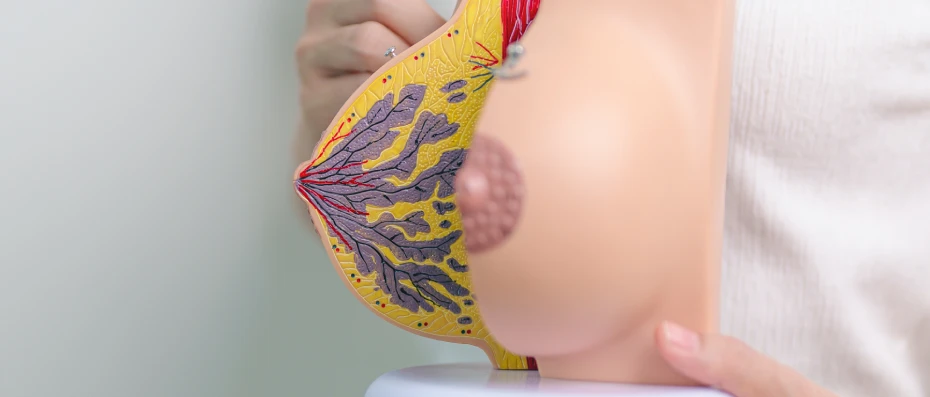
One of the most common questions women ask before breast augmentation is surprisingly simple:
“Will my breast implants feel natural?”
The short answer is:
Breast implants can feel quite natural in appropriately selected patients, but no implant can be guaranteed to feel exactly like natural breast tissue.
How a breast feels after augmentation depends on much more than whether the implant is silicone or saline.
The final result is influenced by:
- How much natural breast tissue you already have
- Skin and soft-tissue thickness
- Implant material
- Silicone gel cohesivity
- Implant size and profile
- Implant position
- The relationship between implant dimensions and your chest
- Scar tissue around the implant
- Healing and swelling
- Long-term changes in your breast tissue
This explains why the same implant can feel very natural in one patient and much easier to detect in another.
The goal should therefore not be to find a universally “most natural implant.”
It should be to select an implant and surgical plan that work with your anatomy.
What Do Breast Implants Actually Feel Like?
A well-planned breast augmentation can create breasts that feel soft and mobile, but an implant remains a medical device beneath the patient’s tissues and may sometimes be detectable by touch.
The experience varies.
Some patients say their breasts eventually feel like a natural part of their body.
Others may be able to feel the implant, particularly around the lower or outer edges.
This is more likely when there is less natural tissue covering the implant.
Research using patient-reported outcomes has shown high levels of satisfaction with breast shape and feel following augmentation. In an Australian registry pilot, more than 90% of breast augmentation respondents were somewhat or very satisfied with shape, feel and wrinkling approximately one year after surgery.
However, satisfaction does not mean every implant becomes completely indistinguishable from natural breast tissue.
That distinction matters.
Do Silicone Breast Implants Feel Natural?
Silicone gel implants are designed with physical properties that can produce a soft breast feel, but different silicone implants can feel and behave differently.
Modern silicone implants are not all filled with identical gel.
Silicone gels vary in cohesivity, meaning how strongly the gel holds together and maintains its form.
Generally:
- Less cohesive gels tend to be softer and more deformable.
- More cohesive gels tend to maintain their shape more strongly and may feel firmer.
But this does not mean that the softest implant is automatically the most natural choice.
A more cohesive implant may sometimes provide better shape support in a patient with thin tissues or a loose breast envelope.
Implant selection is therefore a balance between:
softness + shape + tissue support + desired appearance.
What Is a Cohesive Silicone Gel Implant?
A cohesive silicone implant contains silicone gel engineered to remain together rather than behaving like a free-flowing liquid.
Different implants have different degrees of cohesivity.
This characteristic influences:
- Softness
- Firmness
- Shape retention
- How the implant distributes volume
- How it responds to movement and pressure
Laboratory studies demonstrate meaningful differences in cohesivity, form stability and shell characteristics between implant designs.
Therefore, saying:
“Silicone is silicone.”
is an oversimplification.
The physical properties of the implant matter.
Are Softer Breast Implants More Natural?
Not necessarily. A softer implant may feel natural in some patients, but the ideal cohesivity depends on the patient’s breast tissue, skin envelope and desired breast shape.
Imagine two patients.
Patient A has relatively thick natural breast tissue covering the implant.
Patient B is very slim with minimal breast tissue.
The implant does not interact with these bodies in the same way.
Likewise, a woman seeking subtle volume restoration after pregnancy may have different requirements from someone seeking substantial upper-pole fullness.
This is why implant selection should be tissue-based, rather than simply choosing whichever implant feels softest when held in the hand.
Do Silicone Implants Feel More Natural Than Saline Implants?
Silicone gel and saline implants have different physical characteristics, but “more natural” cannot be determined by filling material alone.
Saline implants contain sterile saltwater inside a silicone shell.
Silicone implants contain silicone gel inside a silicone shell.
The FDA recognizes both types and notes that breast implants vary in size, shell thickness, surface, shape and other characteristics.
In practice, silicone gel is often selected when soft-tissue feel is an important priority.
However, how natural the breast ultimately feels still depends heavily on the amount of tissue covering the implant and the overall surgical plan.
It is therefore too simplistic to say:
silicone = natural
saline = unnatural.
The patient matters as much as the implant.
Does Having More Natural Breast Tissue Make Implants Feel More Natural?
Generally, thicker natural tissue coverage can make an implant less visible and less palpable.
Think of the implant as being underneath several layers of your own tissue.
When those layers are thicker, there is more natural tissue between your hand and the implant.
When a patient is very lean or begins with very little breast tissue, implant edges or rippling may be easier to see or feel.
This is one reason breast augmentation planning should evaluate tissue thickness rather than focusing only on implant volume.
Do Breast Implants Feel Less Natural in Very Thin Women?
Implants may be more palpable in very thin patients because there is less soft tissue covering them, but careful implant selection and pocket planning can help manage this issue.
Thin patients require particular attention to:
- Breast tissue thickness
- Skin thickness
- Implant width
- Implant profile
- Implant size
- Implant position
- Edge coverage
Clinical studies specifically examining thin patients have investigated surgical techniques designed to increase tissue coverage and reduce visible or palpable implant edges.
This does not mean thin women cannot achieve natural-feeling results.
It means their anatomy requires careful planning.
Does Implant Placement Affect How Natural Breast Implants Feel?
Yes. Implant position can influence tissue coverage, implant palpability, movement and the overall behavior of the augmented breast.
Breast implants may be positioned using different pocket strategies depending on the patient.
Terms patients commonly encounter include:
- Subglandular
- Subfascial
- Submuscular
- Dual-plane
There is no universally superior pocket for every woman.
For patients with limited upper-breast tissue, additional tissue or muscle coverage may help reduce implant visibility or palpability.
But implant placement also influences other factors, including breast shape and how the implant behaves when the chest muscle contracts.
The correct pocket should therefore be selected according to anatomy rather than automatically choosing “over” or “under” the muscle.
Do Implants Under the Muscle Feel More Natural?
Under-muscle or partially muscle-covered implants may provide additional coverage in selected patients, particularly when natural breast tissue is thin, but they are not automatically more natural for everyone.
Additional coverage can help disguise the upper implant edge.
However, muscle involvement can also create movement or distortion when the pectoral muscle contracts in some patients.
This is sometimes called animation deformity.
So the question is not simply:
“Is under the muscle better?”
The better question is:
“Which implant position gives this patient appropriate coverage while achieving the desired breast shape?”
Do Breast Implants Move Like Natural Breasts?
Breast implants can move with the surrounding breast tissue, but their movement will not necessarily be identical to an unaugmented breast.
Natural breast movement is influenced by:
- Breast tissue
- Fat
- Skin
- Ligaments
- Gravity
- Breast size
- Age
An augmented breast adds an implant to that system.
Implant movement depends on:
- Pocket dimensions
- Implant properties
- Tissue elasticity
- Implant size
- Capsule formation
- Breast anatomy
A natural-looking and natural-feeling breast is therefore not simply about softness.
Movement matters too.
Do Round Breast Implants Look and Feel Natural?
Round implants can produce natural-looking results when appropriately selected and positioned.
There is a common misconception that:
Round implant = obviously fake breast
and:
Anatomical implant = natural breast.
Human anatomy is more complicated than that.
The final breast shape is produced by the interaction between the implant and the patient’s existing tissues.
Round implants also change their volume distribution depending on body position and implant properties.
Therefore, implant shape alone does not determine whether the result looks or feels natural.
Does Implant Size Affect How Natural Breasts Feel?
Yes. Implant size relative to the patient’s available tissue and chest dimensions can influence both appearance and palpability.
The question should not be:
“Is 300 cc natural?”
or:
“Will 400 cc look fake?”
There is no universal answer.
A 350 cc implant may be proportionate for one woman and inappropriate for another.
Important measurements include:
- Breast base width
- Chest dimensions
- Existing breast volume
- Tissue thickness
- Skin elasticity
- Breast position
If an implant significantly exceeds what the tissues can comfortably cover, implant visibility, edge palpability and tissue stretching may become greater concerns.
This is why implant cc alone cannot predict whether breasts will feel natural.
What Breast Implant Size Feels Most Natural?
There is no single implant volume that feels most natural for everyone.
A “natural” implant size is better thought of as a size that works with the patient’s:
- Breast width
- Chest wall
- Existing tissue
- Skin envelope
- Desired projection
- Overall body proportions
For one patient that may be a relatively small implant.
For another, a larger implant may still fit the anatomy appropriately.
The number on the implant box is only one variable.
Does Implant Profile Affect Natural Feel?
Implant profile primarily describes how much an implant projects forward relative to its base dimensions, and it can influence how the implant fits the chest and distributes volume.
Patients may encounter terms such as:
- Low profile
- Moderate profile
- High profile
- Extra-high profile
A higher profile does not automatically mean an unnatural result.
Likewise, a moderate profile does not guarantee a natural result.
Profile needs to be interpreted alongside implant width, volume, tissue characteristics and the desired shape.
What Is Breast Implant Rippling?
Breast implant rippling refers to folds or wrinkles in the implant that become visible or palpable through the surrounding tissues.
Rippling can affect how natural an augmented breast feels.
It is more likely to become noticeable when tissue coverage is limited, although implant characteristics and pocket selection also matter.
Patients may notice it more around:
- Outer breast
- Lower breast
- Cleavage area in selected cases
Some degree of implant palpability does not necessarily indicate a complication.
But significant or bothersome rippling should be evaluated.
Can You Feel the Edge of a Breast Implant?
Yes, some patients can feel part of the implant edge, particularly in areas with thinner tissue coverage.
The lower and outer breast can sometimes have less coverage than the central breast.
Being able to detect an implant does not automatically mean the surgery has failed.
However, prominent edges may become more noticeable with:
- Very thin tissues
- Large implants relative to available tissue
- Rippling
- Tissue thinning over time
- Weight loss
This should be discussed realistically before surgery, especially in patients with very little breast tissue.
Why Do Breast Implants Feel Hard at First?
Breasts often feel firmer than expected during early recovery because of postoperative swelling, tissue tightness and the early healing process.
This does not necessarily represent the final feel.
During the first weeks after breast augmentation, patients may notice:
- Tightness
- Firmness
- Swelling
- High breast position
- Limited natural movement
As swelling decreases and tissues adapt, the breasts generally become softer and their position evolves.
The exact timeline varies between patients.
This is why judging breast softness during the first days or weeks can be misleading.
When Do Breast Implants Start to Feel Natural?
There is no exact day when implants suddenly begin to feel natural, because softening and settling occur gradually.
Many patients notice progressive changes over the first several weeks and months.
The process depends on:
- Swelling
- Tissue elasticity
- Implant size
- Breast tissue
- Healing
- Whether breast lift was also performed
Online phrases such as “drop and fluff” are often used to describe this gradual settling, but they should not be interpreted as a medically precise timetable.
Your breasts at two weeks are not necessarily your breasts at three months.
Will Breast Implants Always Feel Hard?
No. Persistent hardness is not an expected goal after breast augmentation and should be evaluated if it develops or worsens.
One possible cause is capsular contracture.
The body normally forms a capsule of scar tissue around any breast implant.
Usually, that capsule remains relatively soft.
In capsular contracture, the scar tissue tightens around the implant and may cause:
- Increasing firmness
- Change in breast shape
- Implant displacement
- Discomfort or pain in more significant cases
The FDA lists capsular contracture among recognized breast implant complications.
A breast that becomes progressively hard should therefore not simply be dismissed as “the implant.”
Can Breast Implants Feel Natural to a Partner?
They may feel quite natural to another person, but no surgeon can guarantee that an implant will be impossible to detect by touch.
Whether another person can feel an implant depends heavily on:
- Natural breast tissue
- Tissue thickness
- Implant size
- Implant position
- Implant properties
- Where the breast is touched
The central portion of the breast may have more tissue coverage than the lower or outer edge.
A realistic goal is therefore not necessarily:
“Nobody will ever know by touching them.”
A better goal is:
soft, proportionate breasts with appropriate tissue coverage and natural integration with the patient’s body.
Can Breast Implants Feel Exactly Like Real Breasts?
No surgeon can guarantee that breast implants will feel exactly identical to breasts without implants.
Even an excellent result still contains a medical device.
What can often be optimized is:
- Softness
- Tissue coverage
- Proportion
- Movement
- Implant edge visibility
- Implant palpability
- Breast shape
This distinction is important when setting expectations.
“Natural-feeling” does not have to mean undetectable.
Does Breast Augmentation Affect Nipple Sensation?
Breast and nipple sensation can temporarily or, less commonly, persistently change after breast augmentation.
Changes may include:
- Reduced sensation
- Increased sensitivity
- Numbness
- Altered sensation
Some sensory changes improve as healing progresses, while persistent changes are a recognized potential risk of breast surgery.
Patients should understand this before surgery because natural breast “feel” also includes how the breast feels to the patient, not just how it feels when touched from the outside.
Do Breast Implants Feel Different After Pregnancy or Weight Loss?
Yes. Pregnancy, breastfeeding, aging and major weight changes can alter the tissues surrounding an implant even though the implant itself has not necessarily changed.
Over time, the natural breast tissue and skin may:
- Stretch
- Thin
- Lose volume
- Sag
- Change position
This can make the implant more or less noticeable.
Breast augmentation does not freeze the breast in time.
The implant ages within a body that continues to change.
Are Breast Implants Permanent?
Breast implants are not considered lifetime devices.
The FDA specifically advises patients that the longer implants remain in place, the greater the likelihood that additional surgery may eventually be needed.
Possible reasons include:
- Capsular contracture
- Rupture
- Implant malposition
- Changes in breast tissue
- Cosmetic preferences
- Revision requirements
This does not mean implants must automatically be replaced every ten years.
There is no universal expiration date at which every breast implant must be replaced.
Follow-up should be individualized.
Do Breast Implants Feel Natural After a Breast Lift?
They can, but augmentation with mastopexy involves additional variables because both breast position and volume are being changed.
A breast lift addresses:
- Sagging
- Skin excess
- Nipple position
An implant addresses:
- Volume
- Projection
- Fullness
The goal is to balance those two components.
Adding a larger implant is not automatically the solution to significant sagging, and adding too much volume may place greater demands on the breast tissues.
How Do You Choose Breast Implants for a Natural Result?
For patients who prioritize a natural look and feel, planning should begin with anatomy rather than implant volume.
Important questions include:
How much natural breast tissue do you have?
This influences implant coverage.
How wide is your breast?
Implant width should relate appropriately to the breast and chest.
How elastic is your skin?
A tight breast envelope behaves differently from loose postpartum tissue.
Is the breast sagging?
An implant cannot always substitute for a breast lift.
How much upper-pole fullness do you want?
“Natural” means different things to different patients.
How active are you?
Lifestyle, chest-muscle activity and aesthetic preferences can influence surgical planning.
What does “natural” mean to you?
This may be the most important question of all.
One patient means:
“I don’t want anyone to know I’ve had surgery.”
Another means:
“I want fullness, but I don’t want a very round upper breast.”
Another means:
“I want them to feel soft when I touch them.”
These are related—but different—goals.
Natural Breast Augmentation in Istanbul, Turkey
Patients researching breast augmentation in Istanbul, Turkey often focus heavily on implant brand and implant size.
Those questions are important, but they are only part of the planning process.
Dr. Burak Pasinlioğlu, a European Board Certified Plastic Surgeon (EBOPRAS) based in Istanbul, evaluates breast augmentation according to the patient’s existing breast anatomy, tissue characteristics, chest dimensions and desired result.
Planning may involve assessing:
- Breast width
- Existing breast volume
- Tissue thickness
- Skin elasticity
- Nipple position
- Breast asymmetry
- Degree of sagging
- Implant dimensions
- Implant projection
- Implant position
The goal should not simply be to choose the implant that feels most natural in your hand.
It is to choose an implant that behaves appropriately inside your tissues.
Frequently Asked Questions About How Breast Implants Feel
Do breast implants feel natural to touch?
They can feel soft and natural in many patients, but implants cannot be guaranteed to feel exactly identical to natural breast tissue. Tissue thickness, implant characteristics, placement and healing all influence palpability.
Do silicone breast implants feel like real breasts?
Silicone gel implants can provide a soft breast feel, but the final result depends on much more than the implant material. Existing breast tissue and tissue coverage are especially important.
Which breast implants feel the most natural?
There is no single implant that feels most natural for every woman. Silicone gel cohesivity, implant dimensions and the patient’s tissue characteristics should be considered together.
Are gummy bear implants harder than regular silicone implants?
The term “gummy bear” is imprecise because silicone implants exist across a range of cohesivity. More cohesive gels generally retain shape more strongly and may feel firmer, while less cohesive gels tend to be softer and more deformable.
Do implants under the muscle feel more natural?
Additional muscle coverage may make implant edges less noticeable in selected thin patients, but under-muscle placement is not automatically the most natural option for everyone.
Can you feel breast implants from the outside?
Sometimes. Implant edges or rippling may be palpable, particularly in thin patients or areas with limited tissue coverage.
Can a man or partner tell if you have breast implants by touching them?
Sometimes an implant may be detectable and sometimes it may be difficult to distinguish, depending largely on tissue coverage, implant size and where the breast is touched. No surgeon can guarantee that an implant will be completely undetectable.
Do smaller breast implants feel more natural?
Not automatically. A smaller implant may fit some patients’ tissues more comfortably, but “natural” depends on implant dimensions relative to the patient’s anatomy rather than cc alone.
Do large breast implants feel less natural?
Large implants relative to available tissue may become more visible or palpable, but there is no universal cc threshold at which an implant becomes unnatural.
Do round implants feel natural?
Yes, round implants can produce natural-looking and natural-feeling results when appropriately selected. Implant shape alone does not determine the result.
How long until breast implants feel soft?
Softening occurs gradually over the first weeks and months rather than on one exact date. Early swelling and tissue tightness can make the breasts feel temporarily firmer.
Why do my breast implants feel hard after surgery?
Early firmness can result from swelling and tissue tightness, but persistent or increasing hardness should be evaluated. Capsular contracture is one possible cause of later abnormal firmness.
Is it normal to feel the bottom of a breast implant?
Some implant palpability can occur, particularly along areas with thinner tissue coverage. New, prominent or bothersome changes should be discussed with the treating surgeon.
Does rippling make breast implants feel unnatural?
Visible or palpable rippling can make the implant more noticeable. Tissue thickness, implant characteristics and surgical planning all influence the risk.
Do breast implants feel natural when lying down?
Their behavior can differ from natural breasts because implant properties and the surrounding surgical pocket influence movement. The degree of difference varies substantially between patients.
Will my breasts still feel natural after breastfeeding with implants?
Pregnancy and breastfeeding can change the natural tissues surrounding implants, potentially altering breast softness, position and implant visibility. The effect is individual.
Can breast implants become harder years later?
Yes. New or progressive firmness years after augmentation should be assessed. Capsular contracture is one possible explanation, although other causes may also need evaluation.
Do breast implants ever feel completely normal?
Many patients eventually become accustomed to their augmented breasts and report high satisfaction with their feel, but individual experiences vary. “Normal” is subjective and does not mean the implant is physically identical to natural breast tissue.
What makes breast implants look and feel most natural?
Appropriate implant selection, adequate tissue coverage, suitable implant dimensions and individualized pocket planning are more important than choosing an implant based on size alone.
Medical References
- U.S. Food and Drug Administration — Types of Breast Implants. Overview of saline and silicone gel-filled breast implants, their characteristics and recognized complications.
FDA — Types of Breast Implants - U.S. Food and Drug Administration — What to Know About Breast Implants. Patient guidance on implant types, complications, monitoring and the fact that breast implants are not lifetime devices.
FDA — What to Know About Breast Implants - Physical Properties of Silicone Gel Breast Implants. Aesthetic Surgery Journal. 2018. Laboratory comparison showing differences in gel properties, form stability and shell characteristics among silicone implants.
PubMed — Physical Properties of Silicone Gel Breast Implants - Gel Cohesivity and Breast Augmentation: Applications to Clinical Practice. Aesthetic Surgery Journal Open Forum. 2023. Review examining how gel cohesivity influences implant feel, shape and tissue-based implant selection.
PubMed — Gel Cohesivity and Breast Augmentation - The Science of Cohesivity and Elements of Form Stability. Aesthetic Surgery Journal. 2019. Reviews the relationship between silicone gel cohesivity, softness, firmness and form stability.
PubMed — Science of Cohesivity and Form Stability - Quality of Life and Satisfaction After Breast Augmentation: A Systematic Review and Meta-analysis of BREAST-Q Patient-Reported Outcomes. 2024. Analysis of 39 studies and 18,322 patients demonstrating significant postoperative improvements in breast satisfaction and several quality-of-life measures.
PubMed — Breast Augmentation Satisfaction Meta-analysis - Patient-Reported Outcome Measures for Breast Implant Surgery: A Pilot Study. Aesthetic Surgery Journal. 2019. Australian Breast Device Registry study assessing patient satisfaction with implant shape, feel, rippling, pain and tightness.
PubMed — BREAST-Q Implant Surveillance Study - Understanding the Effect of Breast Augmentation on Quality of Life: Prospective Analysis Using the BREAST-Q. Plastic and Reconstructive Surgery. 2014. Prospective study of 611 patients examining satisfaction and quality-of-life outcomes after augmentation.
PubMed — BREAST-Q Prospective Breast Augmentation Study - Subpectoral-Subfascial Breast Augmentation for Thin-Skinned Patients. Clinical study examining additional tissue coverage in thin patients with limited soft tissue and its relationship with implant palpability and rippling.
PubMed — Breast Augmentation in Thin-Skinned Patients
Medical Disclaimer: This article is for general educational purposes only and does not replace an individual consultation or physical examination. Breast implant selection and placement should be individualized according to anatomy, tissue characteristics, medical history and personal goals. Breast implants are medical devices and have recognized short- and long-term risks that should be discussed before surgery.