


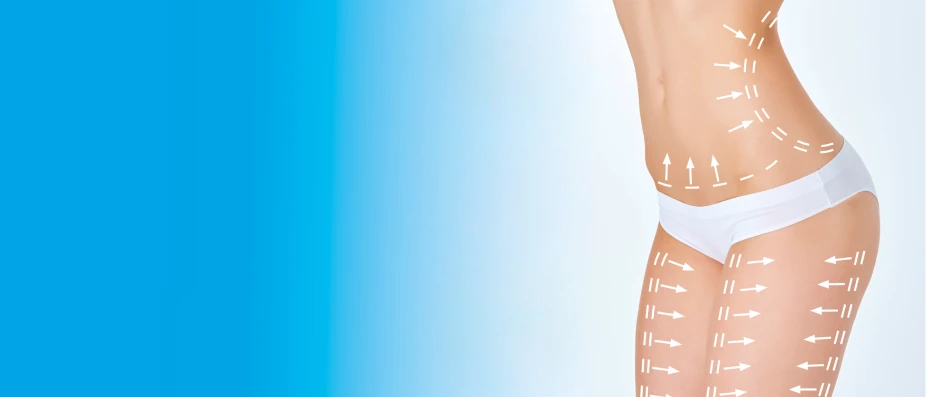
You have stubborn fat around your abdomen, waist or arms, but you also have some loose skin.
You may be wondering:
“If I remove the fat, will the skin tighten around my new shape?”
Or perhaps you have already had liposuction and are concerned that your skin looks looser than expected.
The answer is not simply yes or no.
Liposuction removes fat. It does not directly remove excess skin. However, skin with good elasticity can retract and adapt to the smaller volume underneath it. When skin elasticity is poor or there is significant excess skin, liposuction alone may not provide enough tightening—and in some cases, the looseness can become more noticeable.
That is why the most important part of planning liposuction is not only deciding how much fat to remove.
It is understanding what the skin will do after the fat is gone.
Can Liposuction Tighten Loose Skin?
Liposuction can produce some skin retraction, but it is not a reliable treatment for significant loose skin. The amount of tightening depends on skin elasticity, age, tissue quality, the amount of fat removed and the area being treated.
When fat is removed, the skin has less volume underneath it. If the skin has good elasticity, it may gradually conform to the new contour.
But if the skin is already stretched, thin or hanging, it may not retract sufficiently.
This is particularly important for patients who have experienced major weight loss, have significant abdominal skin laxity or have loose skin on the upper arms and thighs.
The American Society of Plastic Surgeons (ASPS) emphasizes that skin quality should be assessed before liposuction and that additional tightening or lifting may be needed when the skin cannot retract adequately.
What Happens to Your Skin After Liposuction?
Imagine a balloon that has been inflated and then partially deflated.
If the material is elastic, it becomes smaller and adapts.
If the material has been stretched for a long time, it may remain loose.
Human skin is much more complex than a balloon, but the comparison helps explain the basic principle.
During liposuction, a proportion of subcutaneous fat is removed. The skin and surrounding tissues then need to adapt to the reduced volume.
The final appearance depends on two separate factors:
Fat reduction: How much localized fat has been removed and how the contour has changed.
Skin retraction: How well the overlying skin and soft tissues adapt to that smaller contour.
A patient can have excellent fat removal but still be unhappy with the result if significant loose skin remains.
This is why successful fat removal and successful skin tightening are not the same thing.
Does Skin Naturally Tighten After Liposuction?
Yes, some natural skin retraction can occur after liposuction, particularly in patients with good skin elasticity. However, the amount is variable and cannot be guaranteed.
Younger patients often have better skin elasticity, but age alone does not determine the result.
A younger person who has lost a very large amount of weight may have more skin laxity than an older person whose weight has remained stable.
Other factors include:
- Skin thickness and elasticity
- Previous weight changes
- Stretch marks and tissue quality
- Amount of excess skin
- Location of the treatment
- Amount of fat removed
- Individual healing response
The important question is not simply, “Am I young enough for my skin to tighten?”
It is:
“Does my skin have enough elasticity to adapt to the amount of fat we plan to remove?”
Can Liposuction Make Loose Skin Worse?
Yes, liposuction can make existing skin laxity more noticeable when the skin does not retract adequately after fat removal.
This does not mean liposuction always causes loose skin.
It means that removing the fat that previously supported the skin can reveal laxity that was already present.
For example, imagine someone with a full abdomen and stretched skin.
Before surgery, the fat fills the skin envelope.
After removing a substantial amount of fat, the skin has less underlying volume. If it cannot contract sufficiently, it may appear wrinkled, rippled or saggy.
ASPS specifically cautions that excessive fat removal in areas with reduced skin support can highlight looseness and contribute to rippling or sagging.
This is why more aggressive liposuction is not automatically better body contouring.
How Do I Know If I Have Loose Skin or Stubborn Fat?
This is one of the most important distinctions during a consultation.
Signs That Fat May Be the Main Concern
You may have localized fullness that feels relatively thick when pinched, while the skin itself appears reasonably firm.
The area may have good elasticity and little visible hanging skin.
In this situation, liposuction alone may be sufficient to improve the contour.
Signs That Loose Skin May Be the Main Concern
You may notice skin that hangs, folds or wrinkles even when there is relatively little fat underneath it.
The skin may appear thin or have reduced elasticity, particularly after substantial weight loss.
In this situation, removing more fat may not solve the problem.
When Both Fat and Loose Skin Are Present
Many patients have a combination.
For example, the abdomen may contain stubborn subcutaneous fat as well as excess skin.
The treatment plan may therefore need to address both components rather than assuming that fat removal alone will correct everything.
Can Liposuction Tighten Loose Belly Skin?
Liposuction may improve abdominal contour when loose skin is mild and elasticity is good, but it cannot reliably remove or correct significant hanging abdominal skin.
This is especially relevant after pregnancy, major weight loss or previous abdominal surgery.
A patient may have:
- Localized abdominal fat
- Loose lower-abdominal skin
- Stretch marks
- Abdominal muscle separation
- Visceral fat deeper inside the abdomen
These are different anatomical concerns.
Liposuction addresses selected subcutaneous fat.
It does not remove significant excess skin, repair abdominal muscle separation or remove visceral fat.
If the primary concern is a hanging lower-abdominal skin fold, a tummy tuck may be more appropriate than liposuction alone.
Liposuction vs Tummy Tuck: Which Is Better for Loose Skin?
Liposuction is primarily a fat-removal procedure, while a tummy tuck removes excess abdominal skin and can repair abdominal muscle separation when indicated.
The best option depends on the anatomy.
| Concern | Liposuction | Tummy tuck |
|---|---|---|
| Localized subcutaneous fat | Reduces selected fat deposits | May include fat removal or liposuction |
| Significant excess abdominal skin | Does not remove it | Removes excess skin |
| Abdominal muscle separation | Does not repair it | Can repair it when indicated |
| Skin tightening | Depends on natural retraction or adjunctive treatment | Achieved through skin removal and redraping |
| Scarring | Small access incisions | Longer surgical scar |
A tummy tuck is not automatically necessary for every patient with mild skin laxity.
Likewise, liposuction should not be expected to replace a tummy tuck when there is substantial excess skin.
Can Lipo 360 Tighten Loose Skin?
Lipo 360 can improve the circumferential contour of the torso, but it does not automatically tighten loose skin.
Lipo 360 generally refers to treating areas around the abdomen, waist, flanks and back.
The goal is to improve the silhouette from multiple angles.
However, the skin still needs to adapt to the reduced fat volume.
If a patient has good elasticity, the result may appear smooth and well-defined.
If the patient has significant skin laxity, removing fat around the torso may reveal or emphasize loose skin.
The term “360” describes the treatment approach—not a guarantee of skin tightening.
Can Liposuction Tighten Loose Skin on the Arms?
Arm liposuction may work well when excess fat is the main concern and skin elasticity is good. Significant hanging upper-arm skin usually requires a different approach.
This is a common issue after weight loss.
Some patients have relatively firm skin with localized fat along the upper arms.
Others have thin, loose skin that hangs when the arms are lifted.
These are not the same problem.
A small prospective study of radiofrequency-assisted liposuction for upper-arm laxity reported measurable skin contraction, but some patients still required a short-scar arm lift to achieve satisfactory results. The study included only 12 patients, so its findings should not be generalized to everyone.
For substantial excess skin, an arm lift may be the more predictable option because it physically removes the hanging tissue.
Can Liposuction Tighten Loose Thigh Skin?
Liposuction can improve thigh contour when excess fat is the main issue, but it may not correct significant loose thigh skin.
The inner thighs are particularly sensitive to skin elasticity.
Removing fat from an area with poor skin support can sometimes make wrinkling or sagging more noticeable.
Patients with major weight loss may require a thigh lift if the primary concern is excess skin rather than fat.
The appropriate treatment depends on the location and degree of laxity, the amount of remaining fat and the patient’s goals.
Can Liposuction Tighten Loose Skin After Weight Loss?
Liposuction alone is usually not sufficient for significant loose skin after major weight loss.
When someone loses a substantial amount of weight, the fat volume decreases, but the skin may not fully contract.
This can leave excess skin around the:
- Abdomen
- Waist and lower back
- Upper arms
- Thighs
- Chest
Liposuction may still have a role if localized fat remains, but it cannot physically remove large amounts of redundant skin.
Depending on the anatomy, procedures such as a tummy tuck, body lift, arm lift or thigh lift may be considered.
The key is distinguishing remaining fat from excess skin before deciding on surgery.
Can Radiofrequency-Assisted Liposuction Tighten Skin?
Radiofrequency-assisted liposuction may improve soft-tissue contraction in selected patients, but it cannot reliably replace surgical skin removal when laxity is significant.
Radiofrequency-assisted techniques deliver controlled thermal energy to tissues, with the aim of promoting contraction and improving the contour after fat reduction.
Examples of this category include internal radiofrequency-assisted body-contouring technologies.
However, the evidence should be interpreted carefully.
A 2026 systematic review of 19 studies found reported skin retraction with several liposuction technologies, including radiofrequency-assisted, laser-assisted, ultrasound-assisted and traditional suction-assisted liposuction. The authors found substantial differences between studies and a serious risk of bias in approximately half of them, meaning the evidence did not establish that any single technology was definitively superior.
The practical conclusion is:
Energy-assisted liposuction may help selected patients, but no device can guarantee a particular percentage of tightening or eliminate the need for skin-removal surgery.
Is RF-Assisted Liposuction Better Than Traditional Liposuction for Loose Skin?
There is no simple answer that applies to every patient.
Some studies report greater tissue contraction with radiofrequency-assisted techniques, but the quality and consistency of the evidence vary.
A 2022 systematic review of subsurface radiofrequency treatments raised concerns about limited high-quality evidence, inconsistent outcome measurements, complications and conflicts of interest in the published literature.
A more recent 2026 review also concluded that the available comparative evidence is too heterogeneous to establish firm superiority of one technology.
Therefore, the choice should not be based solely on a device name.
It should be based on:
Your anatomy, degree of laxity, expected benefit, risks and whether skin removal would provide a more predictable result.
Can Quantum RF Help Tighten Skin After Liposuction?
Quantum RF is an internal radiofrequency-based technology used in selected body-contouring procedures to promote soft-tissue contraction.
For patients with mild to moderate laxity, an internal RF approach may be considered as part of an individualized treatment plan.
However, it is important not to confuse improvement in tissue contraction with removal of excess skin.
If a patient has a large hanging abdominal fold or substantial post-weight-loss skin excess, RF treatment should not be presented as an equivalent substitute for a tummy tuck or body lift.
The suitability of any device depends on the patient’s anatomy, the specific device and its approved indications, and the surgeon’s assessment.
Can Non-Surgical Skin Tightening Fix Loose Skin After Liposuction?
Non-surgical treatments may improve mild skin laxity in selected patients, but they cannot reliably remove significant excess skin.
Depending on the area and clinical circumstances, treatments may include radiofrequency, ultrasound-based technologies or other energy-based approaches.
These treatments aim to improve tissue quality or contraction.
They do not physically remove a large skin fold.
For patients with substantial hanging skin, surgical excision remains the more direct way to remove the excess tissue.
Does Compression Tighten Loose Skin After Liposuction?
Compression garments are used during postoperative recovery, but they should not be considered a treatment that permanently removes or corrects significant loose skin.
Compression may help support tissues and manage postoperative swelling according to the surgeon’s protocol.
However, wearing a garment longer or tighter does not guarantee that stretched skin will regain its elasticity.
The appropriate garment and duration should be determined by the surgical team.
A garment should not be used as a substitute for assessing whether the patient needs skin tightening or skin removal.
Does Skin Tighten More if You Remove Less Fat?
Not necessarily, but the amount of fat removed can influence the final appearance.
Removing too much fat from an area with poor skin elasticity may leave insufficient underlying support and make laxity more visible.
This is why careful body contouring involves deciding not only where fat should be removed, but also how much should remain.
ASPS emphasizes balancing fat reduction with skin retraction rather than pursuing maximum fat removal.
The objective is a smooth, balanced contour—not the lowest possible amount of remaining fat.
How Long Does Skin Take to Tighten After Liposuction?
Skin adaptation occurs gradually as swelling resolves and tissues heal, and the final appearance may continue evolving for several months.
There is no universal deadline at which every patient’s skin has finished retracting.
The timeline depends on the extent of surgery, skin quality, treatment area and individual healing response.
Early postoperative swelling can also make it difficult to distinguish true skin laxity from temporary tissue changes.
For that reason, decisions about additional skin tightening or revision should generally be made after an appropriate healing period and clinical examination.
Will Loose Skin Go Away on Its Own After Liposuction?
Mild laxity may improve as the skin retracts, but significant excess skin is unlikely to disappear completely through natural contraction alone.
This is particularly true when the skin has been stretched substantially or for a long period.
A patient may experience some improvement without achieving the degree of tightening they hoped for.
The important distinction is between:
Skin that needs time to settle
and
skin that is structurally excessive.
A surgeon can assess this more accurately through examination than through photographs alone.
Can You Have Skin Removal After Liposuction?
Yes, skin-removal surgery may be considered after liposuction if significant excess skin remains, but the timing and procedure depend on the individual patient.
For example, a patient may later consider:
- Tummy tuck
- Arm lift
- Thigh lift
- Body lift
However, it is usually preferable to identify significant skin laxity before the original operation whenever possible.
This allows the surgeon and patient to discuss whether liposuction alone, a combined procedure or a staged approach is most appropriate.
How Do Surgeons Decide Between Liposuction and Skin Removal?
The decision is based on the relationship between fat volume, skin quality and the underlying anatomy.
During consultation, the surgeon may assess:
Fat distribution: Is there enough localized subcutaneous fat to benefit from liposuction?
Skin elasticity: Can the skin reasonably adapt to the planned volume reduction?
Degree of excess skin: Is there a true hanging fold that requires removal?
Body proportions: How will the treated area relate to surrounding areas?
Previous weight changes: Has the skin been stretched by significant weight gain or loss?
Patient goals: Is the priority a smaller contour, smoother skin, removal of hanging tissue or a combination?
The best procedure is the one that addresses the actual anatomical problem.
Liposuction and Skin Tightening in Istanbul with Dr. Burak Pasinlioğlu
For international patients considering liposuction in Istanbul, Turkey, understanding the difference between fat removal and skin tightening is essential.
Dr. Burak Pasinlioğlu, a European Board Certified Plastic Surgeon (EBOPRAS), evaluates body contouring according to the patient’s fat distribution, skin quality, degree of laxity and overall proportions.
Depending on the individual assessment, treatment planning may involve liposuction alone, liposuction combined with an appropriate tightening approach, or skin-removal surgery when significant excess skin is present.
This distinction is particularly important for patients considering:
- Abdominal liposuction
- Lipo 360
- Arm liposuction
- Thigh liposuction
- Tummy tuck
- Body lift after weight loss
- Combined body-contouring procedures
The goal is not simply to remove fat.
It is to create a contour that the skin and underlying tissues can realistically support.
Frequently Asked Questions About Liposuction and Loose Skin
Can liposuction tighten loose skin?
Liposuction may produce some natural skin retraction, but it is not a reliable treatment for significant loose skin. Patients with good elasticity may see the skin adapt to the smaller contour, while those with substantial laxity may need an additional procedure.
Does liposuction make loose skin worse?
It can make existing laxity more noticeable if the skin does not retract adequately after fat removal. This is more likely when skin elasticity is poor or large amounts of fat are removed from an area with reduced skin support.
Will my skin tighten after Lipo 360?
Some skin retraction may occur, but Lipo 360 does not guarantee tightening. The result depends on skin quality, the amount of fat removed and the degree of pre-existing laxity.
Can liposuction remove hanging belly skin?
No. Liposuction removes selected subcutaneous fat but does not physically remove a hanging abdominal skin fold. A tummy tuck may be considered when significant excess skin is the main concern.
Can liposuction tighten loose skin after weight loss?
Liposuction alone is usually insufficient for substantial post-weight-loss skin excess. Skin-removal procedures may be more appropriate when there are significant hanging folds.
Does VASER liposuction tighten skin?
Ultrasound-assisted liposuction may be associated with some tissue retraction, but it does not guarantee correction of loose skin. Current comparative evidence does not establish that one technology is definitively superior for all patients.
Does radiofrequency-assisted liposuction tighten skin?
It may improve soft-tissue contraction in selected patients, but the degree of improvement varies and it cannot reliably replace surgical skin removal. Evidence is limited by differences in study methods and patient selection.
Can Quantum RF replace a tummy tuck?
Not when significant excess abdominal skin requires removal. RF-based treatment may be considered for selected degrees of laxity, but a tummy tuck physically removes excess skin and can address muscle separation when indicated.
Can liposuction tighten loose arm skin?
It may be suitable when fat is the main concern and skin elasticity is good. Significant hanging upper-arm skin may require an arm lift for a more predictable result.
Does compression help loose skin tighten after liposuction?
Compression supports postoperative recovery but does not reliably correct significant excess skin. It should be used according to the surgeon’s instructions rather than as a substitute for skin-removal treatment.
How long does skin take to retract after liposuction?
Skin adaptation develops gradually over several months, but there is no universal timeline. The degree of contraction depends on individual tissue quality and the extent of surgery.
Can I get a tummy tuck after liposuction if my skin is still loose?
Yes, a tummy tuck may be considered if significant excess abdominal skin remains. The timing and suitability should be determined after an appropriate healing period and individual surgical assessment.
Medical References
- American Society of Plastic Surgeons — How Skin Tightening Improves Liposuction Results and Body Contouring. 2026. Explains the importance of skin elasticity, the risk of revealing laxity after excessive fat removal and when additional tightening or lifting may be appropriate. ASPS — Skin Tightening and Liposuction Results
- Faustino LD, et al. Comparative Efficacy of Adjuvant Technologies for Skin Tightening in Liposuction: A Systematic Review and Quantitative Analysis. Aesthetic Plastic Surgery. 2026. A review of 19 studies comparing skin retraction outcomes across liposuction technologies. The authors found substantial heterogeneity and risk of bias, preventing firm conclusions about device superiority. PubMed — Comparative Skin Tightening Technologies
- Duncan DI. Improving Outcomes in Upper Arm Liposuction: Adding Radiofrequency-Assisted Liposuction to Induce Skin Contraction. Aesthetic Surgery Journal. 2012. A small prospective pilot study evaluating radiofrequency-assisted liposuction in patients with upper-arm laxity, including the need for additional skin excision in some patients. PubMed — RF-Assisted Upper Arm Liposuction
- Theodorou SJ, Del Vecchio D, Chia CT. Soft Tissue Contraction in Body Contouring With Radiofrequency-Assisted Liposuction: A Treatment Gap Solution. Aesthetic Surgery Journal. 2018. Reviews the clinical use of radiofrequency-assisted liposuction and its role in soft-tissue contraction. PubMed — RF-Assisted Body Contouring
- Swanson E. A Systematic Review of Subsurface Radiofrequency Treatments in Plastic Surgery. Annals of Plastic Surgery. 2022. Critically examines the evidence for subsurface RF treatments, including efficacy, complications, outcome measurements and limitations of published studies. PubMed — Subsurface Radiofrequency Systematic Review
- Shridharani SM, et al. The Safety of Contraction of Subcutaneous Tissue Following Liposuction Procedures. Aesthetic Surgery Journal Open Forum. 2024. Reviews retrospective safety data for helium plasma radiofrequency treatment following liposuction. The study is relevant to the broader discussion of energy-assisted tissue contraction, although its findings should not be generalized to all devices. PubMed — Subcutaneous Tissue Contraction Safety
Medical Disclaimer: This article is intended for general educational purposes only and does not replace an individual medical consultation. The suitability of liposuction, energy-assisted skin tightening or skin-removal surgery depends on anatomy, skin quality, medical history and the degree of laxity. Results and recovery vary between patients, and no specific amount of skin contraction can be guaranteed.