


By Dr. Burak Pasinlioğlu – EBOPRAS-Certified Plastic Surgeon in Istanbul, Turkey
When it comes to improving the appearance of the upper arms, two of the most commonly considered procedures are arm lift surgery and arm liposuction. Although both procedures can improve arm contours, they address different anatomical concerns.
Some people have stubborn fat deposits that remain despite regular exercise and a healthy lifestyle. Others experience loose, hanging skin following weight loss, aging, or changes in skin elasticity. In many cases, both concerns exist together.
So, is arm liposuction enough? Can loose arm skin be tightened without an arm lift? Is it possible to achieve more defined arms without a long surgical scar?
As a plastic surgeon practicing in Istanbul, Turkey, my approach to arm contouring begins with understanding the underlying anatomical problem rather than immediately selecting a surgical technique.
What Is the Difference Between an Arm Lift and Arm Liposuction?
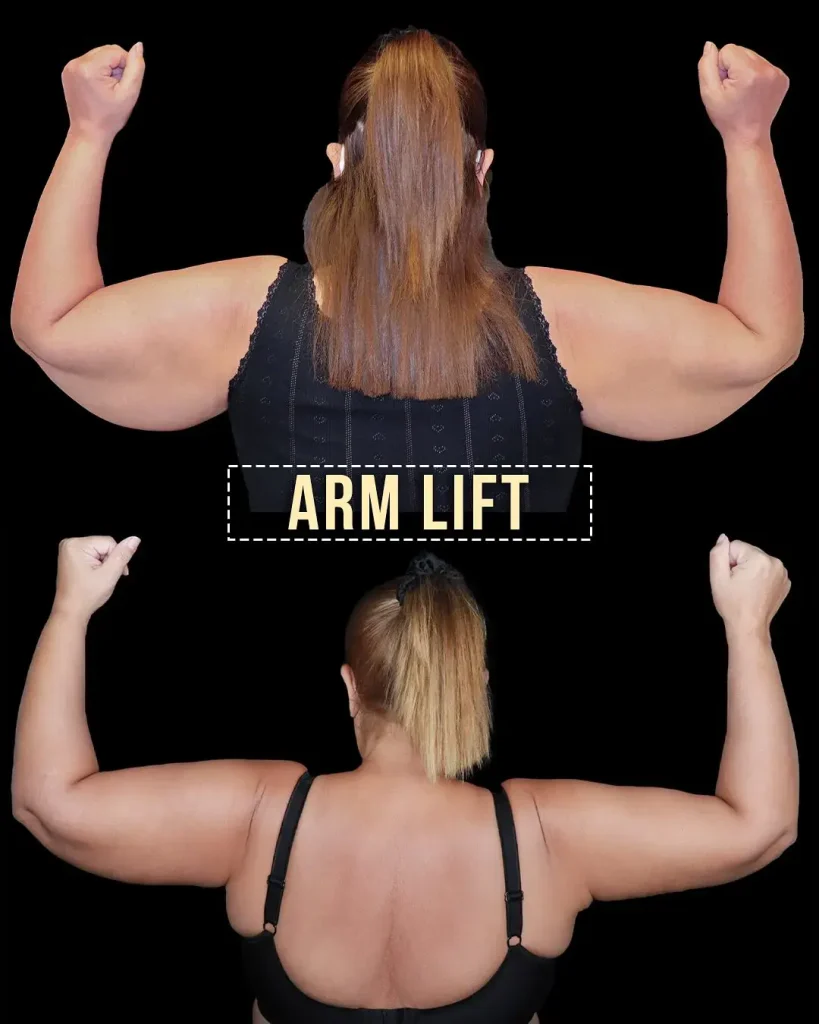
An arm lift, medically known as brachioplasty, removes excess skin and, when necessary, excess fat from the upper arms. Arm liposuction primarily removes localized fat deposits without surgically removing excess skin.
The most suitable procedure depends on skin elasticity, fat distribution, the degree of skin laxity, and individual expectations.
| Feature | Arm Lift (Brachioplasty) | Arm Liposuction |
|---|---|---|
| Primary purpose | Removes excess skin | Removes excess fat |
| Loose and sagging skin | Can directly address it | Limited effectiveness |
| Stubborn arm fat | Can address it when combined with fat removal | Primary treatment target |
| Skin elasticity | Suitable for patients with reduced elasticity | Good elasticity is preferable |
| Surgical scars | Longer incision, depending on technique | Small incision sites |
| Recovery | Generally longer | Generally shorter |
| After weight loss | Suitable for significant excess skin | Suitable for selected patients |
| Combination surgery | Can be combined with liposuction | Can be combined with an arm lift |
Neither procedure is universally better than the other. The correct choice depends on what is causing the change in arm shape.
Why Do Upper Arms Become Loose or Saggy?
Upper arm sagging is not always related to being overweight. Even individuals with a healthy body weight can experience loose skin or localized fat accumulation.
Several factors can contribute to changes in upper arm appearance:
- Natural aging and collagen loss
- Reduced skin elasticity
- Genetic predisposition
- Weight fluctuations
- Significant weight loss
- Weight loss following bariatric surgery
- Localized fat accumulation
- Sun-related skin damage
As the skin loses its ability to contract, it may no longer adapt effectively to changes in the volume underneath it.
This is particularly important when deciding between arm liposuction and brachioplasty.
What Is Arm Liposuction?
Arm liposuction is a surgical body contouring procedure designed to remove excess subcutaneous fat from the upper arms.
During the procedure, thin surgical cannulas are inserted through small incisions to remove selected fat deposits and reshape the upper arm contours.
The objective is not simply to make the arms smaller. It is to create proportions that are harmonious with the shoulders, chest, and overall body structure.
Liposuction is not a weight loss treatment. It is a body contouring procedure intended to address localized fat deposits.
Who Is a Good Candidate for Arm Liposuction?
Arm liposuction may be suitable for individuals who have:
- Localized upper arm fat
- Good skin elasticity
- Minimal skin sagging
- A relatively stable body weight
- Realistic expectations
- General health suitable for surgery
During a consultation, one of the most important factors I evaluate is how well the skin is likely to contract after fat removal.
Removing fat without considering skin quality can result in an unsatisfactory contour.
Can Arm Liposuction Make Loose Skin Worse?
Yes. Arm liposuction can make existing skin laxity more noticeable when the skin has limited elasticity.
Imagine a piece of fabric covering a volume. When that volume becomes smaller, the fabric does not necessarily shrink with it.
The same principle can apply to the skin after liposuction.
If the upper arms contain significant excess skin, removing the underlying fat may reduce arm circumference without correcting the sagging appearance.
For this reason, patients with moderate to severe skin laxity may benefit more from an arm lift than liposuction alone.
What Is an Arm Lift (Brachioplasty)?
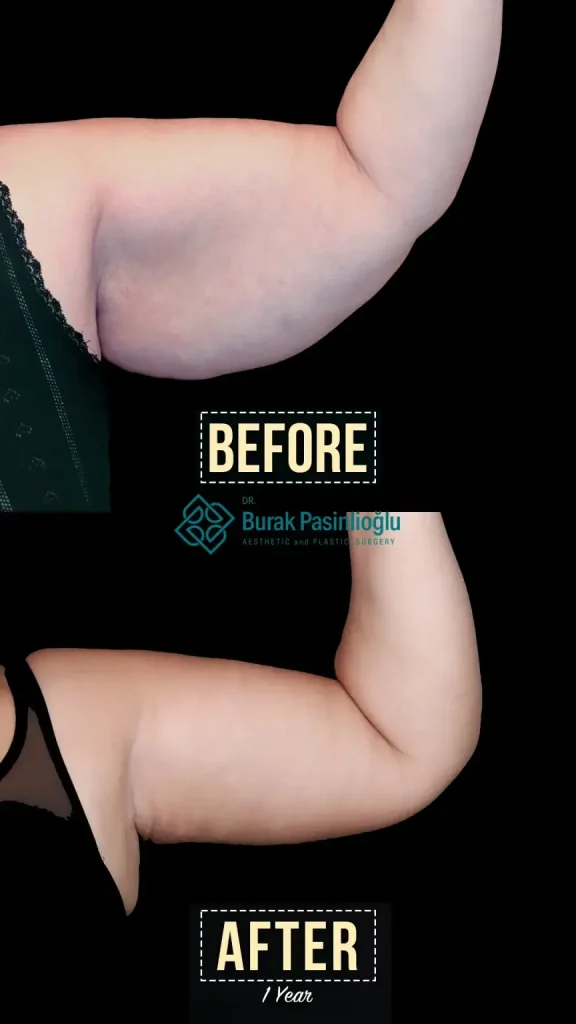
An arm lift, also known as brachioplasty, is a plastic surgery procedure that removes excess skin and reshapes the upper arms.
It is particularly useful for patients who experience skin laxity following weight loss, aging, or reduced skin elasticity.
Unlike liposuction, brachioplasty directly addresses excess skin that cannot adequately contract on its own.
The procedure can also address excess fat when necessary, either through direct tissue removal or additional liposuction.
Who Is a Good Candidate for an Arm Lift?
Arm lift surgery may be appropriate for patients who have:
- Significant upper arm skin laxity
- Hanging skin following weight loss
- Reduced skin elasticity due to aging
- Excess skin that cannot be corrected with liposuction alone
- A stable body weight
- Realistic expectations regarding surgical scars
- General health suitable for surgery
It is not necessary to have experienced massive weight loss to become a candidate for brachioplasty. Even moderate weight loss can result in excess skin, depending on age, genetics, and individual skin quality.
Mini Arm Lift vs Traditional Arm Lift
Not every patient requires the same type of brachioplasty. The location and amount of excess skin determine which surgical technique may be appropriate.
Mini Arm Lift
A mini arm lift, sometimes called a limited-incision brachioplasty, may be suitable for selected patients with mild skin laxity concentrated near the armpit.
The incision is generally positioned within or near the armpit.
However, a mini arm lift has limited effectiveness when excess skin extends along the entire upper arm.
Traditional Arm Lift
A traditional arm lift is commonly considered when excess skin extends from the armpit toward the elbow.
The incision is generally positioned along the inner or posteromedial surface of the upper arm.
This technique allows more extensive skin removal and reshaping.
Extended Arm Lift
An extended brachioplasty may be considered when excess skin extends beyond the upper arms into the armpit and lateral chest region.
It is particularly relevant for some patients following significant weight loss.
The appropriate technique should provide sufficient correction while avoiding unnecessarily extensive incisions.
Can Arm Lift and Arm Liposuction Be Combined?
Yes. Arm lift surgery and arm liposuction can be performed together in appropriately selected patients.
Many individuals have both excess fat and loose skin. In these cases, treating only one component may not adequately address the overall anatomical concern.
A combined arm contouring procedure can address both problems:
- Liposuction reduces and reshapes localized fat deposits.
- Brachioplasty removes excess skin.
- Surgical planning considers the relationship between the upper arms, shoulders, and surrounding areas.
However, combining procedures requires careful assessment of tissue blood supply, surgical duration, wound healing, and overall patient safety.
Can Quantum RF Tighten the Arms Without an Arm Lift?
Radiofrequency-assisted tissue tightening technologies, including Quantum RF, may be considered as part of an arm contouring treatment plan in selected patients.
These technologies use controlled thermal energy to encourage tissue contraction and remodeling.
Patients with mild skin laxity and limited excess skin may be considered for radiofrequency-assisted treatments, sometimes in combination with liposuction.
However, there is an important distinction between skin tightening and skin removal.
Radiofrequency-assisted treatments do not surgically remove excess skin and cannot reliably replace brachioplasty in patients with significant skin laxity.
Energy-based procedures also carry potential risks, including burns, tissue injury, and contour irregularities.
The decision should be based on anatomical assessment, the available clinical evidence, and the patient’s individual needs rather than the technology alone.
Does an Arm Lift Leave Scars?
Yes. Arm lift surgery requires incisions and therefore results in permanent surgical scars.
The length and position of the scar depend on the amount and distribution of excess skin.
With traditional brachioplasty, the incision is usually positioned along the inner or posteromedial surface of the upper arm to reduce its visibility when the arms are resting naturally.
Initially, scars may appear pink, red, or slightly raised. Over time, they generally mature and may become less noticeable.
Scar maturation can take 12–18 months or longer.
Several factors influence the final appearance of surgical scars, including genetics, nicotine use, wound healing, sun exposure, and postoperative care.
Arm liposuction generally leaves smaller scars because the procedure is performed through small incision sites.
Nevertheless, choosing liposuction solely to avoid an arm lift scar may not be appropriate when significant excess skin is present.
Arm Lift vs Arm Liposuction: Recovery Time
Recovery varies depending on the surgical technique, the extent of treatment, and individual healing characteristics.
| Recovery stage | Arm Liposuction | Arm Lift |
|---|---|---|
| Light daily activities | Within several days | Often within the first week |
| Return to desk work | Approximately 3–7 days | Approximately 1–2 weeks |
| Compression garments | Often 3–6 weeks | Often 3–6 weeks |
| Strenuous exercise | Approximately 4–6 weeks | Approximately 4–8 weeks |
| Contour refinement | Approximately 3–6 months | Approximately 3–6 months or longer |
| Scar maturation | Varies | 12–18 months or longer |
These timelines are general estimates rather than guaranteed recovery periods.
Patients should follow their surgeon’s postoperative instructions and receive medical clearance before returning to strenuous exercise or heavy lifting.
What Are the Risks of Arm Lift and Arm Liposuction?
Both brachioplasty and arm liposuction are surgical procedures with potential complications.
Possible risks include:
- Bleeding and infection
- Fluid accumulation (seroma)
- Delayed wound healing
- Changes in skin sensation
- Asymmetry
- Contour irregularities
- Unfavorable scarring
- Nerve or tissue injury
- Blood clots
- Anesthesia-related complications
A thorough preoperative assessment, appropriate patient selection, and structured postoperative follow-up are important components of surgical care.
Patients should also discuss their medical history, medications, nicotine use, previous surgeries, and expectations during their consultation.
Arm Contouring After Weight Loss
Weight loss can significantly change the shape of the upper arms. However, the skin does not always adapt completely to the reduced volume.
Some patients are left with localized fat deposits, while others experience substantial excess skin extending toward the elbow or chest.
For patients with significant skin laxity after weight loss, brachioplasty may provide a more comprehensive correction than liposuction alone.
Before proceeding with post-weight-loss body contouring surgery, it is important to assess weight stability, nutritional status, general health, and wound healing capacity.
In my practice, I also evaluate the relationship between the arms and surrounding body areas when planning surgery after weight loss.
Arm Lift and Arm Liposuction in Istanbul, Turkey
At my plastic surgery practice in Nişantaşı, Istanbul, I approach arm contouring as a personalized surgical process.
As an EBOPRAS-certified plastic surgeon, I perform arm lift surgery, arm liposuction, and body contouring procedures following weight loss.
During the initial consultation, I evaluate:
- Upper arm fat distribution
- Skin elasticity and skin quality
- The location and severity of excess skin
- Shoulder and upper arm proportions
- Previous weight changes
- Medical history
- Expectations regarding surgical scars
- Recovery requirements and potential risks
For international patients considering arm lift surgery in Turkey, the treatment journey also involves planning accommodation, postoperative care, follow-up appointments, and the appropriate timing of return travel.
My objective is not to make every patient’s arms as thin as possible. It is to develop a surgical plan that respects their anatomy, proportions, and individual needs.
How Much Does an Arm Lift Cost in Turkey?
The cost of arm lift surgery and arm liposuction in Turkey varies according to the individual surgical plan.
Factors that influence the cost include the amount of excess skin, the extent of liposuction, the surgical technique, anesthesia, hospital services, combined procedures, and postoperative care.
A personalized consultation is necessary to determine which procedure is appropriate and provide an individualized cost estimate.
Patients considering arm lift surgery or arm liposuction in Istanbul can contact our team to arrange an assessment and discuss their treatment options.
Frequently Asked Questions (FAQ)
1. Which is better, an arm lift or arm liposuction?
Arm liposuction may be more appropriate for patients with localized fat and good skin elasticity. An arm lift is generally more suitable for patients with significant excess skin. When both concerns are present, a combination of the two procedures may be considered.
2. Can liposuction get rid of sagging arms?
Liposuction removes excess fat but does not remove excess skin. Patients with mild skin laxity may experience some natural skin contraction, but significant sagging generally requires surgical skin removal.
3. Can I tighten my arms without an arm lift?
Selected patients with mild skin laxity may benefit from energy-based tissue tightening treatments. However, these treatments cannot reliably correct substantial excess skin in the same way as brachioplasty.
4. Can an arm lift and liposuction be performed at the same time?
Yes. Combining brachioplasty with liposuction can address both excess skin and localized fat. Suitability depends on individual anatomy, health status, and surgical risk assessment.
5. Does arm liposuction leave scars?
Arm liposuction leaves small permanent scars at the cannula insertion sites. Their appearance generally becomes less noticeable as healing progresses, although individual scar formation varies.
6. Where are arm lift scars located?
Traditional arm lift scars are generally positioned along the inner or posteromedial surface of the upper arm. Limited-incision techniques may place the scar near the armpit in selected patients.
7. Is arm lift surgery permanent?
The excess skin removed during brachioplasty does not grow back. However, natural aging, weight fluctuations, and changes in skin elasticity can affect the long-term appearance of the arms.
8. Can fat return after arm liposuction?
Liposuction reduces the number of fat cells in the treated area. However, remaining fat cells can enlarge with weight gain. Maintaining a stable weight helps preserve body contouring results.
9. Can exercise remove excess arm skin?
Exercise can strengthen the arm muscles and improve overall body composition. However, it cannot reliably eliminate significant excess skin following weight loss or reduced skin elasticity.
10. How long does arm lift surgery take?
Arm lift surgery may take approximately 1.5–3 hours, depending on the surgical technique, the amount of excess skin, and whether additional procedures are performed.
11. How long does arm liposuction take?
Arm liposuction may take approximately 1–2 hours. The actual duration depends on the extent of treatment and whether it is combined with other procedures.
12. When can I return to the gym after an arm lift?
Light walking may be encouraged early in recovery. Upper body strength training and heavy lifting are generally postponed for approximately 4–8 weeks, depending on healing and the surgeon’s approval.
13. Is arm lift surgery suitable after moderate weight loss?
Yes. Patients do not need to lose an extreme amount of weight to be candidates for brachioplasty. Skin elasticity, age, genetics, and the amount of remaining excess skin are more relevant than the number of kilograms lost alone.
14. Can men have arm lift surgery or arm liposuction?
Yes. Both procedures can be performed on men. Surgical planning considers masculine arm proportions, muscle structure, skin quality, and individual anatomical characteristics.
15. Can an arm lift be combined with other plastic surgery procedures?
In selected patients, brachioplasty can be combined with breast surgery, tummy tuck, liposuction, or other post-weight-loss body contouring procedures. Some patients may require staged operations to reduce surgical risks.
16. Who performs arm lift and arm liposuction in Istanbul, Turkey?
Dr. Burak Pasinlioğlu is an EBOPRAS-certified plastic, reconstructive, and aesthetic surgeon practicing in Nişantaşı, Istanbul, Turkey. His surgical practice includes brachioplasty, arm liposuction, and personalized body contouring procedures.
17. How do I choose an arm lift surgeon in Turkey?
Patients should consider the surgeon’s specialist qualifications, board certification, experience with body contouring, hospital standards, surgical planning approach, complication management, and postoperative follow-up arrangements.
18. How long should I stay in Turkey after arm lift surgery?
The recommended stay depends on the extent of surgery, wound healing, postoperative assessments, and individual medical needs. International patients should arrange their return flights according to their surgeon’s recommendations and medical clearance.
Dr. Burak Pasinlioğlu
Plastic, Reconstructive and Aesthetic Surgeon
EBOPRAS – European Board of Plastic, Reconstructive and Aesthetic Surgery
Nişantaşı, Istanbul, Turkey
This article is intended for educational purposes and does not replace an individual medical consultation. Surgical suitability, outcomes, risks, and recovery periods vary between patients.
Medical References
1. Complications in Brachioplasty: A Systematic Review and Meta-Analysis.
Plastic and Reconstructive Surgery. 2022;149(1):83–95.
A systematic review and meta-analysis of 29 studies involving 1,578 patients, examining brachioplasty complications, surgical techniques, scarring, and the role of adjunctive liposuction.
DOI: 10.1097/PRS.0000000000008652
Read the scientific publication on PubMed PubMed
2. Arm Contouring: Review and Current Concepts.
Aesthetic Surgery Journal. 2018;38(8):850–860.
A scientific review examining patient selection, upper arm anatomy, liposuction, surgical skin removal, and the limitations of nonsurgical arm tightening technologies.
Read the scientific publication on PubMed PubMed
3. Brachioplasty.
StatPearls – National Center for Biotechnology Information (NCBI). Updated November 2025.
A clinical reference covering brachioplasty indications, surgical techniques, patient evaluation, limited-incision procedures, and postoperative management.
Read the full clinical reference NCBI
4. Complications Associated with Brachioplasty: A Literature Review.
Acta Biomedica. 2017;88(4):393–402.
A literature review involving 1,065 patients across 27 studies, evaluating complications, surgical outcomes, scar formation, and revision requirements.
Read the scientific publication on PubMed PubMed
5. Arm Contouring in Patients With Massive Weight Loss: A Literature Review.
A review of arm contouring techniques following significant weight loss, focusing on surgical scar placement, liposuction-assisted brachioplasty, and postoperative complications.
Read the full scientific publication PubMed Central (PMC)
6. Arm Lift: Brachioplasty.
International Society of Aesthetic Plastic Surgery (ISAPS).
Clinical patient guidance covering the differences between arm lift and arm liposuction, patient selection, surgical risks, recovery, and long-term outcomes.
Read the ISAPS clinical guidance ISAPS
7. Liposuction.
International Society of Aesthetic Plastic Surgery (ISAPS).
Medical guidance explaining liposuction indications, the importance of skin elasticity, and the limitations of fat removal in patients with excess skin.