


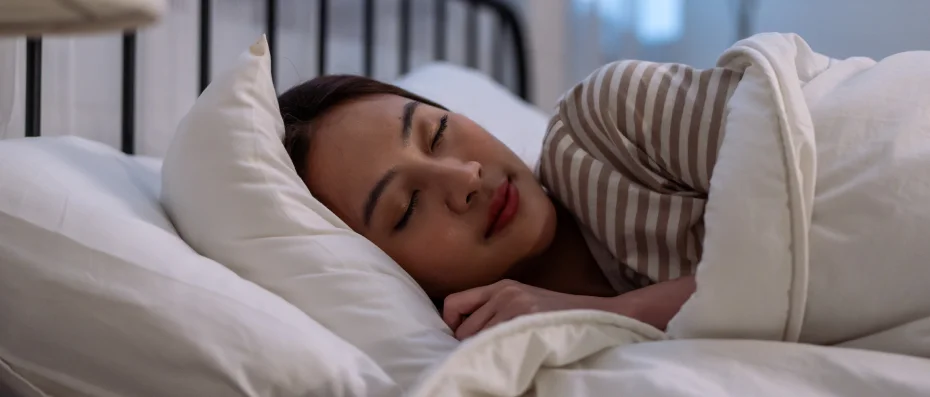
If you’re normally a side sleeper, one surprisingly difficult part of tummy tuck recovery may have nothing to do with your incision, drains or compression garment.
It’s sleeping on your back every night.
After several nights of carefully positioning pillows around yourself, you may start wondering:
“When can I finally sleep on my side after a tummy tuck?”
Search online and you’ll find answers ranging from two weeks to six weeks—or even longer.
But there is a reason the answers are so different.
There is no universal week when every tummy tuck patient can safely return to side sleeping.
Your surgical technique, muscle repair, incision healing, swelling, additional liposuction and overall recovery can all affect the timing.
The good news?
Side sleeping isn’t gone forever.
The important question is not simply when you can turn onto your side, but when your abdomen has healed enough that changing position no longer places unnecessary tension or pressure on recovering tissues.
Let’s explain what that means.
Why Can’t You Sleep Normally Immediately After a Tummy Tuck?
A tummy tuck, or abdominoplasty, changes more than the surface of your abdomen.
Depending on your procedure, your surgeon may:
- Remove excess abdominal skin
- Reposition abdominal tissues
- Repair separated abdominal muscles
- Perform liposuction around the abdomen, waist or flanks
- Create a long lower-abdominal incision
Those tissues need time to begin healing.
During early recovery, your abdomen can also feel extremely tight.
This is why plastic surgeons commonly recommend a slightly flexed sleeping position after tummy tuck surgery rather than lying completely flat.
The goal is to reduce unnecessary tension across the abdominal tissues and incision during the early healing period.
What Is the Best Sleeping Position Immediately After a Tummy Tuck?
During early tummy tuck recovery, patients are commonly instructed to sleep on their back with the upper body and knees slightly elevated.
Think of it as a gentle “beach chair” position.
Instead of lying completely flat:
Your upper body is elevated.
Your hips remain slightly flexed.
Your knees are supported with pillows.
This creates a more relaxed position for the abdomen.
The American Society of Plastic Surgeons notes that following body contouring procedures involving abdominal tightening, patients may be instructed to avoid standing completely upright initially and to sleep with pillows elevating the knees.
Some patients find a recliner particularly comfortable during this stage.
So, When Can You Sleep on Your Side After a Tummy Tuck?
Here is the answer most patients actually need:
You can generally return to side sleeping when your surgeon determines that your abdominal tissues and incision have healed sufficiently and you can change position comfortably without placing excessive tension on the surgical area.
There is no scientifically established rule saying that every patient should start side sleeping on exactly day 14, week three or week six.
Why?
Because not every tummy tuck is the same.
Consider two patients.
One undergoes a relatively straightforward tummy tuck.
The other has:
- Extensive skin removal
- Diastasis recti repair
- Liposuction of the abdomen and flanks
- More significant postoperative swelling
It would make little sense to assume that both should follow exactly the same sleeping timeline.
Why Is Side Sleeping Restricted During Early Recovery?
There are several reasons your surgeon may initially prefer you to remain on your back.
1. Protecting the Abdominal Incision
The lower abdominal incision is still healing.
Twisting your torso or rolling suddenly during sleep may create unnecessary discomfort or tension during the early recovery period.
2. Protecting Muscle Repair
If you have diastasis recti repair during your tummy tuck, the abdominal wall has also been tightened internally.
Muscle repair can contribute to the tight sensation patients experience after surgery.
Your surgeon may therefore be more cautious about positions that twist or stretch the abdomen during early healing.
3. Managing Swelling and Tenderness
Your abdomen—and potentially your flanks if liposuction was performed—may remain swollen and sensitive.
Sleeping directly on a recently treated side may simply be uncomfortable.
4. Avoiding Uncontrolled Movement
The problem isn’t always side sleeping itself.
It’s how you get there.
Rolling quickly from your back onto your side requires rotation through the torso.
During early recovery, sudden twisting movements may be uncomfortable and may place unnecessary stress on healing tissues.
Does Muscle Repair Change When You Can Sleep on Your Side?
Potentially.
During many tummy tuck procedures after pregnancy, the surgeon also addresses diastasis recti, or separation of the abdominal muscles.
When the abdominal wall has been tightened, patients often experience greater tightness during early recovery.
Activities you normally perform without thinking—getting out of bed, coughing, laughing or turning over—suddenly involve muscles that are recovering.
For this reason, your surgeon may recommend being more cautious about changing sleeping positions following significant muscle repair.
Again, this is why another patient’s recovery timeline should not automatically become yours.
What If You Had Liposuction with Your Tummy Tuck?
This can also change the experience.
Tummy tuck surgery is frequently combined with liposuction of areas such as the:
- Waist
- Flanks
- Lower back
- Abdomen
If your flanks have recently undergone liposuction, lying directly on them may feel sore or uncomfortable even if your tummy tuck incision itself is progressing well.
Your surgeon therefore needs to consider all procedures performed, not just the tummy tuck.
How Do You Know You’re Getting Closer to Side Sleeping?
There isn’t a single checklist that medically clears every patient, but several signs may indicate that recovery is progressing.
You may notice that:
- Getting into and out of bed has become easier
- You can stand more comfortably
- Abdominal tightness has decreased
- Your incision is progressing normally
- Swelling and tenderness are improving
- Changing position no longer causes significant discomfort
However, feeling better does not necessarily mean that internal healing is complete.
That’s why your postoperative follow-up is the right time to ask:
“Can I start sleeping on my side now?”
How Should You Start Side Sleeping Again?
Once your surgeon has cleared you, don’t assume you need to immediately spend an entire night in your old sleeping position.
A gradual transition may be more comfortable.
You might begin by turning slightly to one side while still using pillows for support.
A pillow behind your back can prevent excessive rotation.
A pillow between or underneath your knees can make the position more comfortable.
Most importantly, move slowly when changing position.
If turning onto your side causes significant pulling, pain or pressure across the abdomen, your body may be telling you that the position is not comfortable yet.
Discuss it with your surgical team rather than forcing the position.
Can You Accidentally Damage Your Tummy Tuck by Rolling Onto Your Side?
Accidentally waking up slightly turned to one side does not automatically mean you’ve ruined your tummy tuck.
Patients understandably become anxious about this.
Human beings move during sleep.
However, repeatedly sleeping in a position your surgeon has specifically asked you to avoid is different from briefly discovering that you moved during the night.
If you wake up on your side during early recovery, reposition yourself carefully.
If you experience new significant pain, unusual swelling or another concerning change afterward, contact your surgical team.
Can You Sleep Flat After a Tummy Tuck?
Side sleeping and sleeping completely flat are actually two different questions.
During early recovery, surgeons may recommend maintaining some flexion at the hips to reduce tension across the abdomen.
An ASPS educational resource notes that patients may remain bent at the waist while standing or lying down during the early postoperative period to protect the incision and allow the tissues to adapt.
Exactly when you can lie completely flat depends on your surgical technique and recovery.
Do not force yourself flat simply because a certain number of days has passed.
What About Sleeping on Your Stomach?
Stomach sleeping generally requires even more caution because it places direct pressure on the operated abdomen.
It is therefore not usually the first sleeping position patients return to after a tummy tuck.
If you’re naturally a stomach sleeper, ask your surgeon specifically when direct pressure on the abdomen is appropriate again.
Side sleeping and stomach sleeping should not automatically be treated as the same milestone.
Why Good Sleep Matters During Tummy Tuck Recovery
Sleep isn’t merely about comfort.
Your body is performing a tremendous amount of repair after surgery.
Adequate sleep supports normal recovery and can also make the psychological side of postoperative healing easier.
Unfortunately, surgery can temporarily disrupt your normal sleeping habits.
Pain, swelling, medication, compression garments and having to sleep in an unfamiliar position can all make the first nights challenging.
Preparing before surgery can help.
If you know you will need to sleep on your back, practice before your operation.
Experiment with:
- A wedge pillow
- Pillows underneath your knees
- Pillows beside your body
- A recliner
Finding a comfortable setup before surgery is much easier than trying to solve the problem during your first night home.
Tummy Tuck Recovery in Istanbul with Dr. Burak Pasinlioğlu
For international patients considering a tummy tuck in Istanbul, Turkey, postoperative instructions are particularly important.
Your recovery plan needs to cover much more than the surgery itself.
Patients should understand how to sleep, how to move safely, how to care for their incision, how to manage compression garments and drains when used, and when they can gradually return to normal activities.
Dr. Burak Pasinlioğlu, a European Board Certified Plastic Surgeon (EBOPRAS) based in Istanbul, plans tummy tuck recovery according to the individual operation performed.
A patient undergoing tummy tuck with significant diastasis recti repair may not have exactly the same recovery experience as someone undergoing a different form of abdominal contouring.
Similarly, combining tummy tuck with liposuction or other body contouring procedures can change postoperative comfort and positioning.
This is why international patients should receive clear recovery instructions before leaving Istanbul and understand which milestones require approval from their surgical team.
Frequently Asked Questions About Sleeping After a Tummy Tuck
When can I sleep on my side after a tummy tuck?
There is no universal week that is appropriate for every patient. Side sleeping should generally resume after your surgeon confirms that your healing is sufficiently advanced and the position does not place inappropriate tension or pressure on the surgical area.
Can I sleep on my side 2 weeks after a tummy tuck?
Possibly for some patients, but two weeks should not be treated as a universal rule. The extent of surgery, muscle repair, liposuction, incision healing and swelling all matter. Ask your surgeon before changing your sleeping position.
Why do I have to sleep on my back after a tummy tuck?
Back sleeping in a supported, slightly flexed position can help avoid unnecessary tension across the healing abdomen during early recovery.
How long should I sleep elevated after a tummy tuck?
There is no single duration appropriate for every patient. Your surgeon should tell you when you can gradually reduce elevation based on the operation performed and your healing progress.
Can I sleep completely flat after a tummy tuck?
Not necessarily during early recovery. Some patients are instructed to maintain a slightly flexed position initially to reduce abdominal tension. Transition to lying flat according to your surgeon’s instructions.
What happens if I accidentally sleep on my side after a tummy tuck?
Accidentally rolling partially onto your side does not automatically mean you have damaged your result. Carefully reposition yourself. Contact your surgeon if you develop new significant pain, unusual swelling or another concerning symptom.
When can I sleep on my stomach after a tummy tuck?
Stomach sleeping places direct pressure on the operated abdomen and usually requires more healing than simply turning slightly onto your side. Your surgeon should specifically clear you before you return to stomach sleeping.
Does diastasis recti repair affect sleeping position?
It can. Repairing the abdominal wall may increase tightness and make twisting movements uncomfortable during early recovery, so your surgeon may recommend additional caution.
The Bottom Line: Don’t Choose Your Sleeping Position by the Calendar
So, when can you sleep on your side after a tummy tuck?
There isn’t one date that applies to everyone.
And that’s the most important answer.
During early tummy tuck recovery, protecting healing tissues and avoiding unnecessary abdominal tension matters more than reaching a particular day on the calendar. Professional guidance recognizes that postoperative positioning and activity restrictions should be individualized.
Once healing has progressed sufficiently, patients should ultimately be able to return to normal sleeping positions, including side sleeping.
Instead of asking only:
“Has it been enough weeks?”
ask your surgeon:
“Has my abdomen healed enough for me to sleep comfortably on my side?”
That small change in the question makes a big difference.
Because recovery isn’t a race toward week two, four or six.
It’s a gradual return to normal life based on how your body and your operation are healing.
Medical References
- American Society of Plastic Surgeons — Tummy Tuck Recovery
- American Society of Plastic Surgeons — Recovery After Body Contouring Surgery
- American Society of Plastic Surgeons — What You Need to Know About Tummy Tuck Recovery
- PubMed — Clinical Evaluation of Abdominoplasty and Postoperative Positioning
- NCBI Bookshelf — Abdominoplasty: Surgical Technique and Patient Positioning
Medical Disclaimer: This article is intended for general educational purposes and does not replace individualized medical advice. Sleeping restrictions and the timing of returning to side or stomach sleeping should be determined by your plastic surgeon according to your procedure and recovery.